How to say Merry Christmas in Spanish (and Happy New Year)
Merry Christmas in Spanish is ¡Feliz Navidad! (feh-LEES nah-vee-DAHD). Happy New Year is ¡Feliz Año Nuevo! (feh-LEES AH-nyoh NWEH-voh), and a card that covers both says ¡Feliz Navidad y próspero año nuevo!
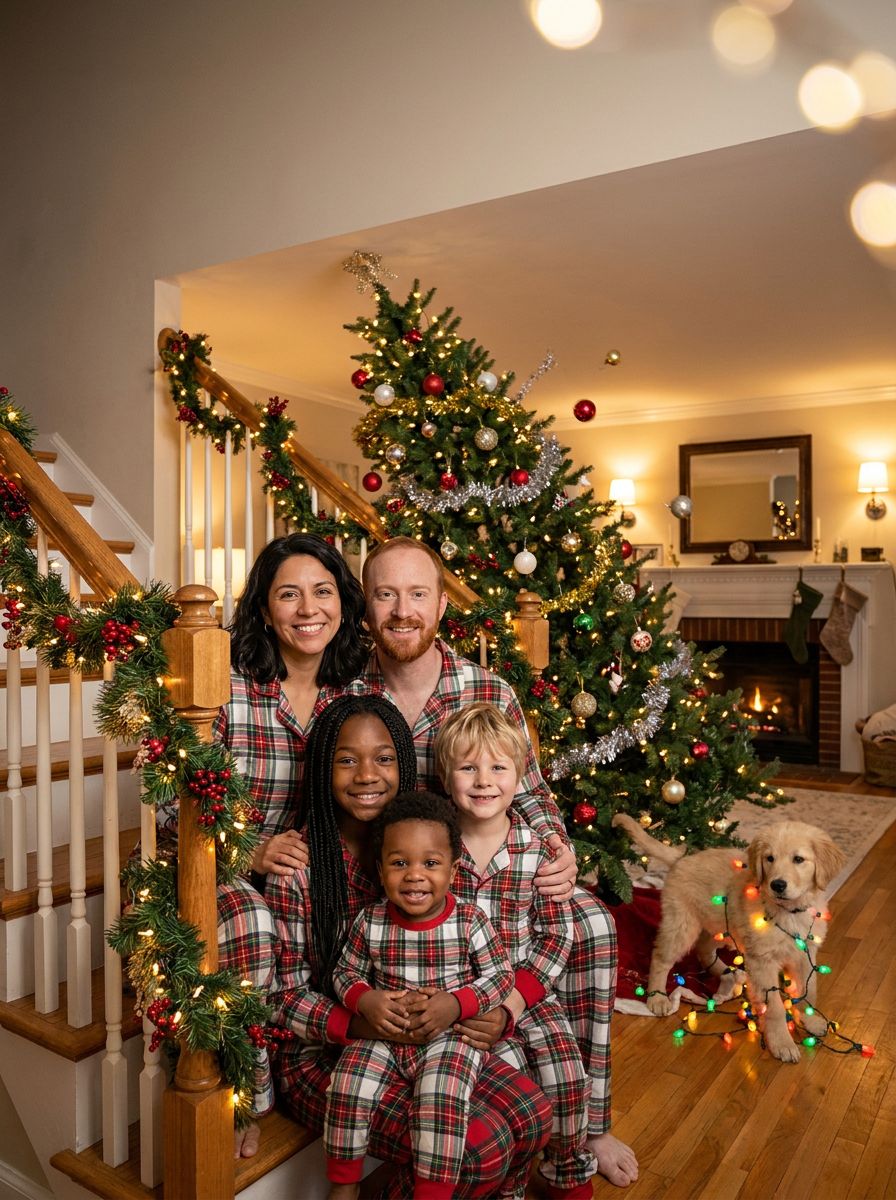
Who’s in it?
Pay, and it’s ready in about 20 seconds
Four pictures to pick from, no watermark, a link that opens on any phone. We email it to you too.
Sent. Its link opens this card.
Send this one with HiWith Pro
$7.99/mo
- Pictures and a video for each card
- A card for every occasion
- Send them by link
Merry Christmas in Spanish is ¡Feliz Navidad! Feliz means happy, and Navidad means Christmas, from the Latin word for birth. Happy New Year is ¡Feliz Año Nuevo!, and a card that covers both says ¡Feliz Navidad y próspero año nuevo!: a merry Christmas and a prosperous new year.
Below: how to say each greeting and when to use it, what Feliz Navidad means (the song included), how Christmas runs in Spain, Mexico and the rest of Latin America, and 58 Christmas and New Year lines in Spanish with the English under each one, sorted by who they're for. Tap one and the Spanish goes on a card with their face in it.
How do you say Merry Christmas in Spanish?
Say ¡Feliz Navidad! to anyone you'd say Merry Christmas to. In most of Latin America feliz sounds like feh-LEES. In most of Spain the z is the th in "think", so it's feh-LEETH. Navidad ends on a soft d, close to the th in "the", and plenty of speakers barely say it.
Written down, a Spanish exclamation opens with an upside-down mark and closes with the usual one: ¡Feliz Navidad! Here's every greeting you'll need in December and January.
| Spanish | English | How to say it | When to use it |
|---|---|---|---|
| ¡Feliz Navidad! | Merry Christmas | feh-LEES nah-vee-DAHD | Anyone who celebrates Christmas, all of December |
| ¡Feliz Nochebuena! | Happy Christmas Eve | feh-LEES noh-cheh-BWEH-nah | December 24, the big family dinner |
| ¡Felices fiestas! | Happy holidays | feh-LEE-sehs fee-EHS-tahs | Work, clients, or anyone you're not sure celebrates Christmas |
| ¡Feliz Año Nuevo! | Happy New Year | feh-LEES AH-nyoh NWEH-voh | December 31 to mid-January |
| ¡Próspero año nuevo! | Prosperous New Year | PROHS-peh-roh AH-nyoh NWEH-voh | Cards and formal notes. It sounds like a card on purpose |
| ¡Feliz Navidad y próspero año nuevo! | Merry Christmas and a prosperous New Year | feh-LEES nah-vee-DAHD ee PROHS-peh-roh AH-nyoh NWEH-voh | The classic card line: both holidays in one sentence |
| ¡Felices Pascuas! | Merry Christmas (in Spain) | feh-LEE-sehs PAHS-kwahs | Mostly Spain. Elsewhere Pascua usually means Easter |
| ¡Feliz fin de año! | Happy end of the year | feh-LEES feen deh AH-nyoh | December 31, across Latin America |
| ¡Feliz Día de Reyes! | Happy Three Kings Day | feh-LEES DEE-ah deh RREH-yehs | January 6, when the Three Kings bring presents |
What does Feliz Navidad mean?
Feliz Navidad means Merry Christmas, word for word "happy Christmas". Feliz is happy, from the same Latin root as the English felicity. Navidad comes from the Latin nativitas, birth, which also gave English the word nativity. So the greeting wishes you a happy day of the birth.
Most people who search it have the song stuck in their head. José Feliciano, born in Puerto Rico, recorded Feliz Navidad in 1970, and its whole Spanish half is one line: Feliz Navidad, próspero año y felicidad, "Merry Christmas, a prosperous year and happiness". The English half says the same thing again for everyone else, which makes it the shortest Spanish lesson on the radio.
Feliz Año Nuevo: keep the ñ
Año (AH-nyoh) means year. Leave the tilde off and it becomes ano, which is anatomy, not a calendar. Here's how to type it:
- Phone: hold the n key until ñ pops up. Hold ! for ¡ and ? for ¿.
- Mac: Option+n, then n, gives ñ. Option+1 gives ¡. Option+e, then a vowel, gives é.
- Windows: hold Alt and type 0241 on the number pad for ñ, or 0161 for ¡.
- Capitals: Spanish capitalizes Navidad, Nochebuena and Nochevieja, but not feliz or próspero in the middle of a line. Año Nuevo takes capitals when it means January 1. When it means the whole year ahead, as in próspero año nuevo, Fundéu, the Spanish style service backed by the Royal Spanish Academy, writes it in lowercase. Cards use both, and nobody will send it back.
58 Christmas and New Year lines in Spanish to put on the card
Tap one and it goes on your card. You can change every word.
Short ones for a text (cortos)
For family (para la familia)
For grandparents (para los abuelos)
For your partner (para tu pareja)
For friends (para los amigos)
For coworkers and clients (compañeros de trabajo)
Religious (religiosos)
Not religious (para todos)
For the New Year (Año Nuevo)
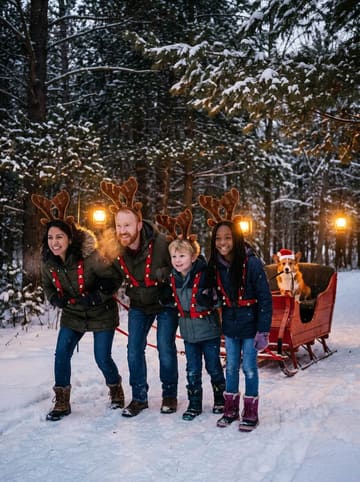
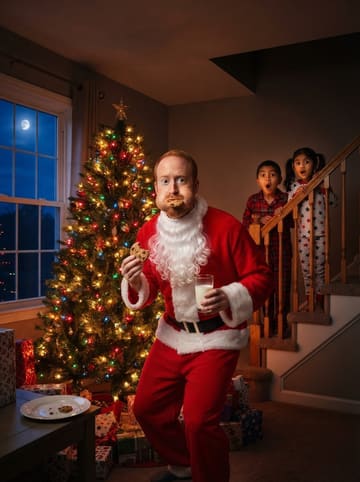
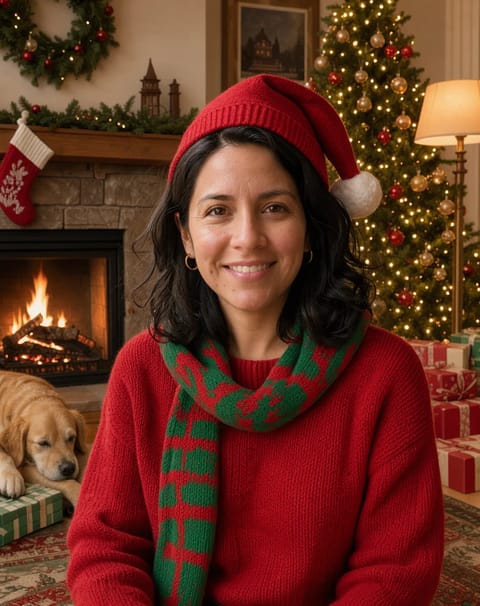
Christmas cards made from your photos


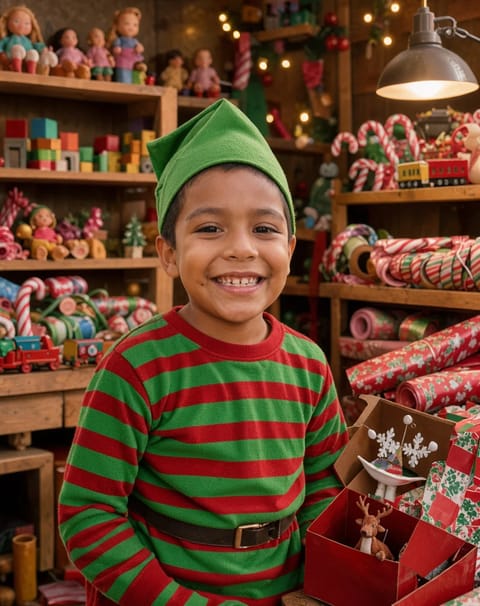
Christmas in Spain, Mexico and the rest of Latin America
Christmas in Spanish runs longer than the English version. In Spain and most of Latin America the big night is Christmas Eve, Nochebuena, with dinner and often midnight Mass, the Misa de Gallo. In many Latin American homes the presents open at midnight. The season doesn't end until January 6, Día de Reyes, when the Three Kings bring presents, and in Mexico it stretches all the way to February 2.
Do Mexicans say Feliz Navidad? Yes, the same as everywhere else, which is the answer to every search for "merry Christmas in Mexican". Spain adds ¡Felices Pascuas!, and on December 31 Spain says Nochevieja while most of Latin America says fin de año or año viejo. In Ecuador and Colombia, life-size dolls of the old year get burned at midnight.
| Date (2026–27) | What happens | Where |
|---|---|---|
| Wed, Dec 16 to Thu, Dec 24 | Las posadas: nine nights of processions that re-enact Mary and Joseph looking for an inn, ending in a party and a piñata | Mexico, Guatemala |
| Thu, Dec 24 | Nochebuena: the big family dinner, often followed by midnight Mass | Spain and most of Latin America |
| Fri, Dec 25 | Navidad: a quieter day of leftovers and visits | Everywhere |
| Mon, Dec 28 | Día de los Santos Inocentes: a day for pranks, like April Fools' Day | Spain and Latin America |
| Thu, Dec 31 | Nochevieja or fin de año: twelve grapes at midnight, one for each chime, one wish each | Spain, and much of Latin America |
| Fri, Jan 1 | Año Nuevo | Everywhere |
| Wed, Jan 6 | Día de Reyes: the Three Kings bring presents, and there's a ring-shaped cake, roscón de Reyes in Spain, rosca de Reyes in Mexico | Spain, Mexico, Puerto Rico and much of Latin America |
| Tue, Feb 2 | Día de la Candelaria: whoever found the baby figure in the rosca buys the tamales | Mexico |
How to write a Christmas card in Spanish
A Spanish card has the same three parts as an English one: their name, one true thing, and the greeting. "Querida abuela: gracias por los tamales del año pasado. ¡Feliz Navidad! Con cariño, Ana." A few things to get right:
- Open with Querida for a woman, Querido for a man and Queridos for a group: Querida abuela, Querido Tomás, Queridos tíos.
- Use tú with family and friends (te deseo). Use usted with an older boss, a client or anyone you'd call Mr. or Mrs. (le deseo).
- Sign off with Con cariño (with love), Un abrazo (a hug), Besos (kisses, for family and close friends) or Saludos (regards, for work).
- Writing in English too? Our merry Christmas wishes and Happy New Year wishes are sorted the same way, by who's getting them.
- Their birthday's next? We keep birthday wishes in Spanish, each with its English, and for everyone else on the list there's Merry Christmas in different languages, from German to Hawaiian.
How it works
- Pick a cardPilots, mermaids, rock stars, one very surprised cake. Every one shows a real example first.
- Add their photosOne clear face each, up to 5 people. A selfie is fine. No sign-up.
- Preview it, then payOne picture of them in the card in about 20 seconds. Like it? Apple Pay or Google Pay, and four pictures arrive about 20 seconds later, the video in about 90.
How do you say Merry Christmas in Spanish?
¡Feliz Navidad! (feh-LEES nah-vee-DAHD). Put a name after a comma: ¡Feliz Navidad, Ana! To wish Merry Christmas and Happy New Year at once, write ¡Feliz Navidad y próspero año nuevo!
What does Navidad mean?
Christmas. It comes from the Latin nativitas, birth, the same root as the English word nativity. The plural, las Navidades, means the whole Christmas season.
Do Mexicans say Feliz Navidad?
Yes. ¡Feliz Navidad! is the greeting in Mexico, as it is in the rest of the Spanish-speaking world. You'll also hear ¡Felices fiestas! for the whole season, which in Mexico runs from the first posada on December 16 to Día de Reyes on January 6.
Is it okay to say Feliz Navidad if you don't speak Spanish?
Yes. It's friendly, it's easy to say, and Spanish speakers hear it in every accent each December. Say it to the people you'd say Merry Christmas to. For a client or a mixed office, ¡Felices fiestas! is the safer pick, the same way Happy holidays is in English.
What are some good New Year wishes in Spanish?
¡Feliz Año Nuevo! is the basic one. For a card, try ¡Próspero año nuevo!, Que este año te traiga salud, amor y dinero (may this year bring you health, love and money), or the old saying Año nuevo, vida nueva (new year, new life). There are seven more in the list above.
How do you say Merry Christmas in a cute way in Spanish?
Add a pet name and one extra line: ¡Feliz Navidad, mi amor! Eres mi regalo favorito (Merry Christmas, my love! You're my favorite present). For a child, ¡Feliz Navidad, mi cielo! is Merry Christmas, sweetheart, literally "my sky".
What can you say instead of Feliz Navidad?
¡Felices fiestas! (happy holidays) works for anyone. ¡Felices Pascuas! is common in Spain. For a work note, Le deseo unas felices fiestas (I wish you happy holidays) is polite and formal.
Can I put a Spanish message on a card with their photo?
Yes. Tap a line and it goes on the card under the picture, accents and ¡ included, and you can change every word. HiWith puts the people from your photos in a Christmas scene with no writing in it, so the card speaks whatever language your message does. You send a link that opens on any phone.
By HiWith (Winding AI, Inc.) · support@winding.ai · Updated