How to say Merry Christmas in different languages
Merry Christmas is Feliz Navidad in Spanish, Joyeux Noël in French, Frohe Weihnachten in German, Buon Natale in Italian and Mele Kalikimaka in Hawaiian. The table below has 37 languages, with Happy New Year and how to say both.

Who’s in it?
Pay, and it’s ready in about 20 seconds
Four pictures to pick from, no watermark, a link that opens on any phone. We email it to you too.
Sent. Its link opens this card.
Send this one with HiWith Pro
$7.99/mo
- Pictures and a video for each card
- A card for every occasion
- Send them by link
Merry Christmas is Feliz Navidad in Spanish, Joyeux Noël in French, Frohe Weihnachten in German and Mele Kalikimaka in Hawaiian. Some languages wish you a merry Christmas, some a happy or a blessed one, and Japanese and Korean simply borrowed the English words.
Below is one table of 37 languages: Merry Christmas, Happy New Year, and a simple way to say both out loud. Then the stories behind the ones people ask about most, from why Germans wish you a good slide into the new year to why Hawaiian has no s. Where our sources disagreed on a greeting, we left the language out.
Merry Christmas and Happy New Year in 37 languages
Capital letters in the last column mark the stressed syllable. "kh" is the rough sound in Scottish loch, and "zh" is the s in measure. For the tonal languages (Mandarin, Cantonese, Thai, Vietnamese) the respelling only gets you close: the tones carry meaning, so listen to a speaker if you can.
Spanish gets a page of its own, with 58 card lines: Merry Christmas in Spanish.
| Language | Merry Christmas | Happy New Year | How to say it |
|---|---|---|---|
| Afrikaans | Geseënde Kersfees | Gelukkige Nuwejaar | khuh-SEE-un-duh KERS-fees; khuh-LUK-ih-khuh NEE-vuh-yahr |
| Arabic | عيد ميلاد مجيد (ʿĪd mīlād majīd) | سنة سعيدة (Sana saʿīda) | eed mee-LAHD mah-JEED; SAH-nah sah-EE-dah |
| Cantonese | 聖誕快樂 (sing daan faai lok) | 新年快樂 (san nin faai lok) | sing dahn fai lohk; sun neen fai lohk (tonal: listen if you can) |
| Chinese (Mandarin) | 圣诞快乐 (Shèngdàn kuàilè) | 新年快乐 (Xīnnián kuàilè) | shung dahn kwai luh; sheen nyen kwai luh (tonal: listen if you can) |
| Croatian | Sretan Božić | Sretna Nova godina | SREH-tahn BOH-zheech; SRET-nah NOH-vah GOH-dee-nah |
| Czech | Veselé Vánoce | Šťastný nový rok | VEH-seh-leh VAH-noh-tseh; SHTYAHST-nee NOH-vee rok |
| Danish | Glædelig jul | Godt nytår | GLEH-thuh-lee YOOL; got NEW-tor |
| Dutch | Vrolijk kerstfeest | Gelukkig nieuwjaar | VROH-luk KERST-fayst; khuh-LUK-ukh NEEW-yahr |
| Finnish | Hyvää joulua | Hyvää uutta vuotta | HEW-vah YOH-loo-ah; HEW-vah OOT-tah VWOHT-tah |
| French | Joyeux Noël | Bonne année | zhwah-YUH noh-EL; bun ah-NAY |
| German | Frohe Weihnachten | Frohes neues Jahr | FROH-uh VY-nahkh-ten; FROH-ess NOY-ess YAHR |
| Greek | Καλά Χριστούγεννα (Kalá Christoúgenna) | Καλή Χρονιά (Kalí Chroniá) | kah-LAH khree-STOO-yeh-nah; kah-LEE khroh-NYAH |
| Haitian Creole | Jwaye Nwèl | Bòn ane | zhwah-YEH NWEL; bun ah-NAY |
| Hawaiian | Mele Kalikimaka | Hauʻoli Makahiki Hou | MEH-leh kah-LEE-kee-MAH-kah; how-OH-lee mah-kah-HEE-kee HOH-oo |
| Hungarian | Boldog karácsonyt | Boldog új évet | BOHL-dohg KAW-rah-chohnyt; BOHL-dohg ooy AY-vet |
| Icelandic | Gleðileg jól | Gleðilegt nýtt ár | GLETH-ih-leg YOHL; GLETH-ih-lekht neet OWR |
| Indonesian | Selamat Hari Natal | Selamat Tahun Baru | seh-LAH-maht HAH-ree NAH-tahl; seh-LAH-maht TAH-hoon BAH-roo |
| Irish | Nollaig Shona Duit | Athbhliain faoi mhaise duit | NUL-ig HUN-uh ditch; AH-vlee-in fwee WASH-uh ditch |
| Italian | Buon Natale | Buon anno (or Felice anno nuovo) | bwohn nah-TAH-leh; bwohn AHN-noh |
| Japanese | メリークリスマス (Merī Kurisumasu) | 明けましておめでとうございます (Akemashite omedetō gozaimasu) | meh-ree koo-ree-soo-mah-soo; ah-keh-mahsh-teh oh-meh-deh-toh go-zai-mahs |
| Korean | 메리 크리스마스 (Meri Keuriseumaseu) | 새해 복 많이 받으세요 (Saehae bok mani badeuseyo) | meh-ree keu-ree-seu-mah-seu; seh-heh bohk mah-nee bah-deu-seh-yo |
| Norwegian | God jul | Godt nytt år | goo YOOL; got nit OHR |
| Polish | Wesołych Świąt | Szczęśliwego Nowego Roku | veh-SOH-wikh SHFYONT; shchen-shlee-VEH-goh noh-VEH-goh ROH-koo |
| Portuguese | Feliz Natal | Feliz Ano Novo | feh-LEES nah-TOW; feh-LEES AH-noo NOH-voo |
| Romanian | Crăciun fericit | La mulți ani | kruh-CHOON feh-ree-CHEET; lah MOOLTS AHN |
| Russian | С Рождеством (S Rozhdestvom) | С Новым годом (S Novym godom) | s rahzh-dest-VOM; s NOH-vim GOH-dum |
| Scottish Gaelic | Nollaig Chridheil | Bliadhna Mhath Ùr | NOL-ik KHREE-al; BLEE-uh-nuh vah OOR |
| Serbian | Срећан Божић (Srećan Božić) | Срећна Нова година (Srećna Nova godina) | SREH-chahn BOH-zheech; SRECH-nah NOH-vah GOH-dee-nah |
| Spanish | ¡Feliz Navidad! | ¡Feliz Año Nuevo! | feh-LEES nah-vee-DAHD; feh-LEES AH-nyoh NWEH-voh |
| Swahili | Heri ya Krismasi | Heri ya Mwaka Mpya | HEH-ree yah krees-MAH-see; HEH-ree yah MWAH-kah m-PYAH |
| Swedish | God jul | Gott nytt år | good YOOL; got nit OHR |
| Tagalog (Filipino) | Maligayang Pasko | Manigong Bagong Taon | mah-lee-GAH-yahng PAHS-koh; mah-NEE-gohng BAH-gohng tah-OHN |
| Thai | สุขสันต์วันคริสต์มาส (Suk san wan Khrit-mat) | สวัสดีปีใหม่ (Sawatdi pi mai) | sook sahn wahn krit-maht; sah-waht-dee pee my (tonal: listen if you can) |
| Turkish | Mutlu Noeller | Mutlu yıllar | moot-LOO no-el-LEHR; moot-LOO yuh-LAHR |
| Ukrainian | Веселого Різдва (Veseloho Rizdva) | З Новим роком (Z Novym rokom) | veh-SEH-loh-hoh reez-DVAH; z noh-VIM ROH-kom |
| Vietnamese | Chúc mừng Giáng sinh | Chúc mừng năm mới | chook mung zahng sing; chook mung nahm moy (tonal: listen if you can) |
| Welsh | Nadolig Llawen | Blwyddyn Newydd Dda | nah-DOH-lig HLOW-en; BLOO-ih-thin NEH-with THAH |
Christmas cards made from your photos

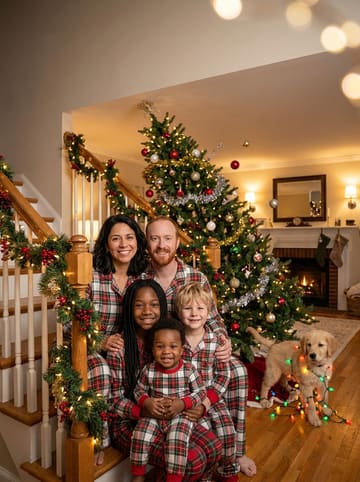



Merry Christmas in German: Frohe Weihnachten
Frohe Weihnachten (FROH-uh VY-nahkh-ten) is Merry Christmas in German. Fröhliche Weihnachten (FRUR-lih-khuh) means the same and sounds a little more like a carol. Weihnachten literally means "the holy nights": weih- is holy, Nacht is night. In Germany and Austria the presents come on Christmas Eve, Heiligabend.
Happy New Year is Frohes neues Jahr (FROH-ess NOY-ess YAHR), but only from January 1. Before that, Germans wish you einen guten Rutsch, "a good slide" into the new year. Most say it comes from rutschen, to slide; some trace it to the Hebrew rosh, head, as in Rosh Hashanah. Germans still argue about it. New Year's Eve is Silvester, named after Pope Sylvester I, whose feast day is December 31.
Merry Christmas and Happy New Year in French: Joyeux Noël, Bonne année
Joyeux Noël (zhwah-YUH noh-EL) means joyful Christmas. Noël comes from the Latin natalis, birthday. The big meal is the réveillon on Christmas Eve, and there's a second réveillon on New Year's Eve, la Saint-Sylvestre.
Happy New Year in French is Bonne année (bun ah-NAY), often followed by et bonne santé, "and good health". The French take New Year cards more seriously than Christmas cards: cartes de vœux, signed meilleurs vœux (best wishes), go out all through January, and January 31 is the polite deadline. Haitian Creole has its own spelling of both greetings: Jwaye Nwèl and Bòn ane.
Merry Christmas in Italian: Buon Natale
Buon Natale (bwohn nah-TAH-leh) is Merry Christmas in Italian. Natale, like the French Noël, comes from the Latin for birthday. Buon Natale a tutti is "Merry Christmas, everyone", and the answer to Buon Natale is Altrettanto (likewise) or Buon Natale anche a te (to you too). Auguri! (ow-GOO-ree, best wishes) works for any holiday at all.
Happy New Year is Buon anno (bwohn AHN-noh) or Felice anno nuovo (feh-LEE-cheh AHN-noh NWOH-voh). Say both n's in anno. Italian has the same trap as Spanish: with one n, ano is the body part, not the year. The season ends on January 6 with La Befana, the old woman on a broom who fills stockings with candy, or coal for the naughty ones.
Mele Kalikimaka meaning: Merry Christmas in Hawaiian
Mele Kalikimaka (MEH-leh kah-LEE-kee-MAH-kah) is Merry Christmas in Hawaiian, borrowed sound for sound from English. Hawaiian has 13 letters and no r, s or t, and every syllable ends in a vowel. So merry becomes mele, and Christmas becomes ka-li-ki-ma-ka: k for the hard ch and the s, l for the r, and a vowel after every consonant. The greeting was in print by 1904, in the Hawaiian-language newspaper Ka Nupepa Kuokoa, and a 1949 song by Hawaii-born composer R. Alex Anderson carried it to the mainland (en.wikipedia.org/wiki/Mele_Kalikimaka).
Happy New Year is Hauʻoli Makahiki Hou (how-OH-lee mah-kah-HEE-kee HOH-oo): happy, year, new. The ʻ is the ʻokina, a little catch in the voice. Makahiki is also the name of the old Hawaiian season of rest and harvest that once marked the new year.
Merry Christmas and Happy New Year in Japanese
Japanese borrowed the English: メリークリスマス, Merī Kurisumasu (meh-ree koo-ree-soo-mah-soo). Christmas isn't a family holiday in Japan. Christmas Eve is a date night for couples, with a strawberry Christmas cake, and the family holiday is New Year.
Happy New Year is 明けましておめでとうございます, Akemashite omedetō gozaimasu (ah-keh-mahsh-teh oh-meh-deh-toh go-zai-mahs), "congratulations on the opening of the year". Only say it from January 1 on. Before that, to someone you won't see again this year, say Yoi otoshi o (yoy oh-toh-shee oh), "have a good year end". Japan's big card is the New Year card, the nengajō: Japan Post holds them and delivers them on New Year's Day.
Merry Christmas in Portuguese: Feliz Natal
Feliz Natal is Merry Christmas in Portuguese. In Brazil it sounds like feh-LEES nah-TOW; in Portugal, feh-LEESH nuh-TAHL. Happy New Year is Feliz Ano Novo (feh-LEES AH-noo NOH-voo), and Boas Festas (happy holidays) covers both.
Portuguese has no ñ trap: ano, with one n, really is the year. In Brazil, New Year's Eve is the réveillon: people wear white and, on the beach, jump seven waves at midnight for luck. In Portugal, it's twelve raisins at midnight, one per wish.
Merry Christmas in Tagalog (Filipino): Maligayang Pasko
Maligayang Pasko (mah-lee-GAH-yahng PAHS-koh) is Merry Christmas in Tagalog, the language Filipino is based on. Maligaya is happy, and Pasko comes from the Spanish Pascua. Happy New Year is Manigong Bagong Taon (mah-NEE-gohng BAH-gohng tah-OHN), a prosperous new year. In Cebuano it's Malipayong Pasko.
The Philippines has one of the longest Christmas seasons anywhere. Carols start in the "ber months", from September 1. From December 16 to 24 there are nine dawn Masses, Simbang Gabi, and on Christmas Eve the family eats Noche Buena together under a star lantern, the parol.
Merry Christmas and Happy New Year in Korean
Korean borrowed Merry Christmas too: 메리 크리스마스, Meri Keuriseumaseu (meh-ree keu-ree-seu-mah-seu). The formal version is 즐거운 성탄절 보내세요, Jeulgeoun seongtanjeol bonaeseyo, "have a joyful Christmas". Christmas is a public holiday in South Korea, and like in Japan, it's popular with couples.
Happy New Year is 새해 복 많이 받으세요, Saehae bok mani badeuseyo (seh-heh bohk mah-nee bah-deu-seh-yo), "receive lots of luck in the new year". You'll hear it twice: on January 1 and again at Seollal, the Lunar New Year, which is the bigger holiday.
Merry Christmas in Polish: Wesołych Świąt
Wesołych Świąt (veh-SOH-wikh SHFYONT) is Merry Christmas in Polish, literally "merry holidays". The ł sounds like an English w. The full version is Wesołych Świąt Bożego Narodzenia, "merry holidays of God's birth". Merry Christmas and Happy New Year together is Wesołych Świąt i Szczęśliwego Nowego Roku.
The big night is Christmas Eve, Wigilia. Dinner starts when the first star comes out, there are traditionally twelve meatless dishes, everyone breaks a thin wafer, opłatek, and trades wishes, and one extra place is set for an unexpected guest.
Merry Christmas in Irish and Scottish Gaelic
In Irish it's Nollaig Shona Duit (NUL-ig HUN-uh ditch) to one person and Nollaig Shona Daoibh (NUL-ig HUN-uh deev) to more than one. Happy New Year is Athbhliain faoi mhaise duit (AH-vlee-in fwee WASH-uh ditch). In Ireland the language is called Irish, or Gaeilge, rather than Gaelic. Dialects differ, so treat our respellings as close, not exact.
Scottish Gaelic is a cousin with its own spelling: Nollaig Chridheil (NOL-ik KHREE-al) for Merry Christmas and Bliadhna Mhath Ùr (BLEE-uh-nuh vah OOR) for Happy New Year. In Welsh, it's Nadolig Llawen and Blwyddyn Newydd Dda.
Russian, Ukrainian, Serbian and Greek: when is Christmas?
Many Orthodox churches still keep the old Julian calendar, which puts Christmas on January 7. Russia and Serbia celebrate it then: Thursday, January 7, 2027. In Russian that's С Рождеством, S Rozhdestvom, and the bigger holiday is New Year, С Новым годом, when Ded Moroz, Grandfather Frost, brings the presents. Serbs greet each other on Christmas Day with Христос се роди, Hristos se rodi (Christ is born), and the answer is Ваистину се роди, Vaistinu se rodi (truly, He is born).
Ukraine moved its official Christmas to December 25 in 2023, so Веселого Різдва, Veseloho Rizdva, now goes out in December. Greece celebrates on December 25: Καλά Χριστούγεννα, Kalá Christoúgenna. Greeks also say Χρόνια πολλά, Chrónia pollá (KHROH-nyah poh-LAH), "many years", for almost any celebration.
Cards that work in any language
Our Christmas pictures have no writing in them, on purpose. The greeting goes under the picture, where you type it: Joyeux Noël, Wesołych Świąt, ¡Feliz Navidad!, accents and all. So one card works for Grandma in Kraków and the cousins in Ohio.
Each card was tried many times on our test family, made-up people who don't exist, before it shipped. The snow globe needed one rule: early takes shrank the faces until nobody looked like anyone, so now the globe fills the frame and the people inside are porcelain figurines with their own faces. The Family Reindeer harnesses everyone to Santa's sleigh while the dog drives.
For the words, our merry Christmas wishes are short enough to translate, and our Happy New Year wishes cover the week after. Writing in English and stuck on the apostrophe? Here's Happy New Year or Happy New Years, settled.

How it works
- Pick a cardPilots, mermaids, rock stars, one very surprised cake. Every one shows a real example first.
- Add their photosOne clear face each, up to 5 people. A selfie is fine. No sign-up.
- Preview it, then payOne picture of them in the card in about 20 seconds. Like it? Apple Pay or Google Pay, and four pictures arrive about 20 seconds later, the video in about 90.
How do you say Merry Christmas in Scottish Gaelic?
Nollaig Chridheil (NOL-ik KHREE-al). Happy New Year is Bliadhna Mhath Ùr (BLEE-uh-nuh vah OOR), and the two together are Nollaig Chridheil agus Bliadhna Mhath Ùr. Irish is close but spelled differently: Nollaig Shona Duit.
How do you pronounce Christmas in Chinese?
Christmas is 圣诞节, Shèngdàn jié (shung dahn jyeh), "the holy birth festival". Merry Christmas is 圣诞快乐, Shèngdàn kuàilè (shung dahn kwai luh), where kuàilè means happy. Mandarin is tonal, so the respelling only gets you close.
How do you say Merry Christmas in Haiti?
In Haitian Creole it's Jwaye Nwèl (zhwah-YEH NWEL), and in French, Haiti's other official language, Joyeux Noël. Happy New Year is Bòn ane. January 1 is also Haiti's Independence Day, celebrated with a bowl of soup joumou, a squash soup.
How does South Africa say Merry Christmas?
South Africa has 12 official languages, so it depends who you ask. In English it's Merry Christmas, and in Afrikaans it's Geseënde Kersfees (khuh-SEE-un-duh KERS-fees), "blessed Christmas". Christmas falls in summer there, so lunch is often outside.
How do you say Merry Christmas in Swedish, Norwegian, Danish and Finnish?
God jul in Swedish (good YOOL) and Norwegian (goo YOOL), Glædelig jul in Danish and Hyvää joulua in Finnish. Jul is the old word that English kept as yule. Across the Nordic countries, Christmas Eve is the main day.
What does Joyeux Noël mean?
Merry Christmas, word for word "joyful Christmas". Joyeux is joyful, and Noël comes from the Latin natalis, birthday. It's pronounced zhwah-YUH noh-EL.
What can you say instead of Merry Christmas?
Happy holidays, in any language: Felices fiestas in Spanish, Boas Festas in Portuguese, Fijne feestdagen in Dutch, Frohe Festtage in German. In English, Happy holidays and Season's greetings do the same job.
Can I put a greeting in another language on the card?
Yes. Type it as the message, in any language and with any accents, up to 200 characters. The picture has no words in it, so it never clashes with what you write. You send a link that opens on any phone, anywhere.
By HiWith (Winding AI, Inc.) · support@winding.ai · Updated