The first Christmas card (and when to send yours in 2026)
Henry Cole, a London civil servant, commissioned the first Christmas card in 1843. John Callcott Horsley drew it, a thousand copies were printed, and the spares sold for a shilling each.
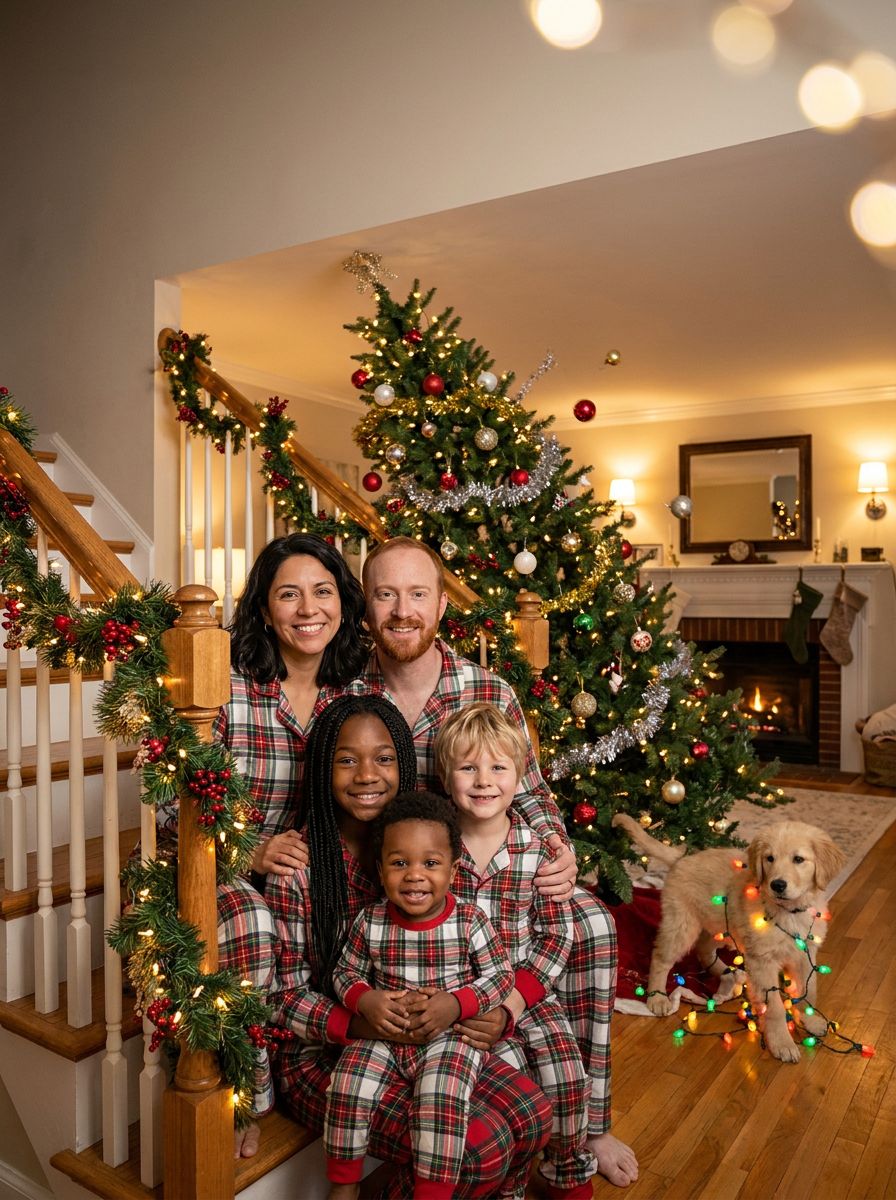
Who’s in it?
Pay, and it’s ready in about 20 seconds
Four pictures to pick from, no watermark, a link that opens on any phone. We email it to you too.
Sent. Its link opens this card.
The first Christmas card was sent in London in 1843. Henry Cole, a busy civil servant with a pile of unanswered letters, asked his friend John Callcott Horsley to draw one greeting he could send to everybody. A thousand were printed, and the spares went on sale for a shilling apiece.
It showed a family raising their glasses, a small child included, which did not go over well with everyone. Here's the whole story, when to send cards this year (in the mail or as a link), the etiquette in one list, and what we learned making a family card 183 years later.
Christmas cards made from your photos

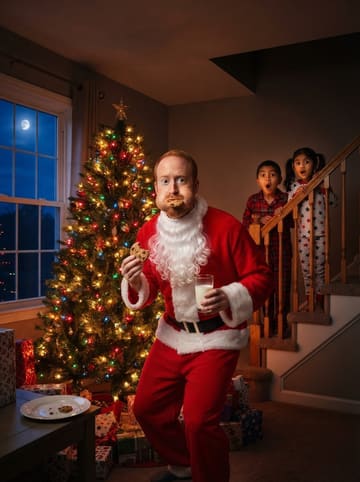


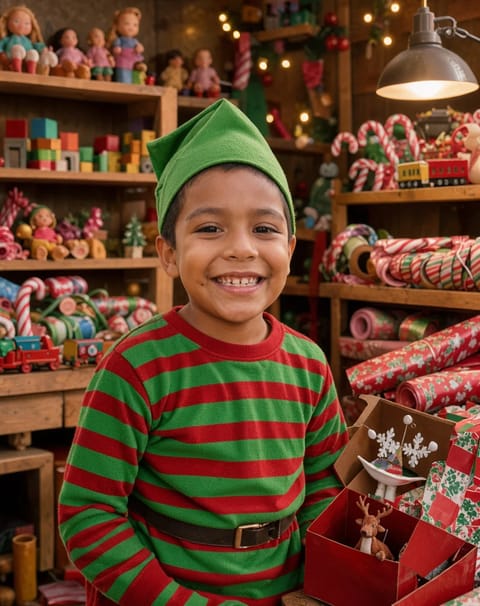
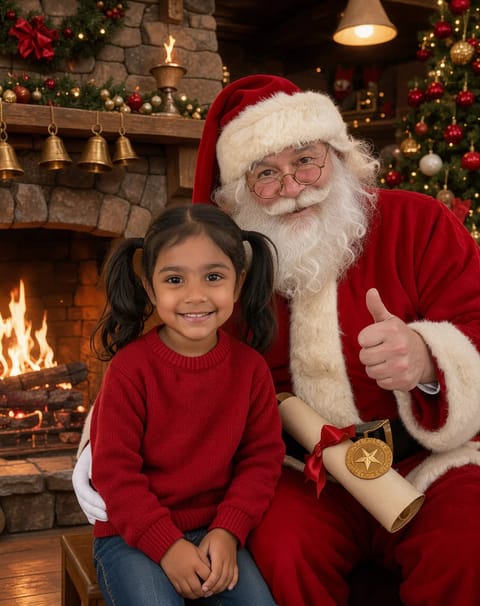
Who invented the Christmas card?
Henry Cole, in 1843. Cole was a civil servant who had helped reform the British post, including the Uniform Penny Post of 1840, which made a letter cheap enough for anyone to send. The catch: by December his own mail was out of control. His diary for December 17, 1843, records Horsley coming over in the evening with the design. The Victoria and Albert Museum, which Cole later ran as its first director, tells it here: vam.ac.uk/articles/the-first-christmas-card
The cards were lithographs colored by hand, with space to write in a name. Cole ordered a thousand. The ones he didn't need went on sale for a shilling each, which was expensive at the time, and the venture flopped. The first Christmas card was a time-saving hack that didn't sell.
It caught on anyway, slowly. Cole himself was still sending the same 1843 design in the 1860s, which makes him the first person to send a Christmas card and very likely the first to reuse one.
What was on the first Christmas card, and why people objected
The card is a triptych. In the colored middle panel, three generations of a family sit at a table and raise their glasses to whoever opened it. The side panels, in gray, show acts of charity: food and clothes handed to the poor. Along the bottom: "A Merry Christmas and a Happy New Year to You."
Look closer at the table, though. A small child is being helped to a glass of wine and is drinking it with real commitment. That detail reportedly raised hackles in the temperance movement, as Cambridge University's Centre for Material Texts puts it: english.cam.ac.uk/cmt/?p=2082 So the very first Christmas card came with the very first complaint about a Christmas card.
Horsley signed the copy he sent Cole with a tiny self-portrait in the corner instead of his name, dated "Xmasse, 1843." People have been putting their own faces on Christmas cards ever since. It took a while to make that easier than drawing.
When should you send Christmas cards in 2026?
For mailed cards, work backward from the Post Office. USPS recommends sending First-Class Mail by Thursday, December 17 for delivery before Christmas inside the lower 48 states, and lists Wednesday, December 9 for its international services: usps.com/holiday/holiday-shipping-dates.htm
The polite window opens after Thanksgiving, which is Thursday, November 26 this year. A card that lands in the first two weeks of December gets a full month on the fridge. One that lands on December 23 still counts. One that lands in January is a New Year card, and nobody has ever complained about getting one.
| What you're sending | Send it by | When it arrives |
|---|---|---|
| Mailed card going abroad | Wednesday, Dec. 9 | Before Christmas, if USPS's international date holds |
| Mailed card, First-Class, lower 48 | Thursday, Dec. 17 | Before Christmas |
| Mailed card, Priority Mail | Friday, Dec. 18 | Before Christmas |
| Mailed card, Priority Mail Express | Saturday, Dec. 19 | Before Christmas |
| A card sent as a link, like ours | Christmas morning, Friday, Dec. 25 | The second you send it |
Christmas card etiquette, in one list
- Send to people you'd actually call. A card is a small hello, and forty people you like beat a hundred and forty you vaguely remember.
- Sign as a family the right way: "The Garcias," never "The Garcia's." Our guide to last names in plural settles the Joneses and the Martinezes.
- Write one line by hand, even on a photo card. One true sentence about their year beats a printed paragraph about yours, and our Christmas card messages are there when you're stuck.
- Match the greeting to the person: "Merry Christmas" if they celebrate it, and one of these happy holidays wishes for the office or anyone you're unsure about.
- You don't owe a card back. Getting one is a hello, not an invoice.
- Late is fine. After the 25th, write "Happy New Year" and you're early instead of late.
- A card sent as a link counts. It still has your picture and your words on it, and nobody had to find a stamp.
How we made a family card 183 years later
Horsley's card is a family portrait: three generations at one table, everyone raising a glass. It's still the hardest Christmas picture to get right, and we know because we tried it many times on our test family, made-up people who don't exist.
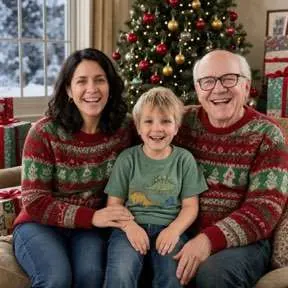
Our first family idea put mom, a four-year-old and grandpa on a sofa in matching Christmas sweaters, the boy on grandpa's lap. The joke: "Matching sweaters. Non-negotiable." Leo, 4, negotiated. In several takes he kept the green dinosaur T-shirt from his photo while everyone around him wore the sweater. Walter, 82, had the opposite problem. Most takes quietly made him look younger, which sounds like a compliment and gets graded as a miss. A card only works if grandpa looks like grandpa.
So every card now asks for each person's exact face, age and skin, with nobody added and nobody left out, and each idea is graded on exactly that before it ships. As for the wine: the only toast on our Christmas cards is Glam Mrs. Claus lifting a mug of cocoa in her video.
Cole's idea holds up, by the way. One picture, sent to everyone, with a line for each person. Ours just shows the people you're sending it to instead of a family they've never met.

How it works
- Pick a cardPilots, mermaids, rock stars, one very surprised cake. Every one shows a real example first.
- Add their photosOne clear face each, up to 5 people. A selfie is fine. No sign-up.
- Preview it, then payOne picture of them in the card in about 10 seconds. Like it? Apple Pay or Google Pay, and four pictures arrive about 20 seconds later, the video in about 90.
How do you begin a Christmas card?
With their name and one line that's only true of them: "Dear Ana, this was the year you finally learned to parallel park." Save "Merry Christmas" for the end and it lands better.
What's a good closing for a Christmas card?
"Love" for family, "Warmly" or "All the best" for work, and "Merry Christmas" when you can't decide. Then your name, or everyone's in the house.
Why are there robins on Christmas cards?
The usual story is that Victorian British postmen wore red coats and were nicknamed robins, so early cards showed robins delivering the mail. Museums treat that as a legend; a red bird in a bare winter garden was popular on its own.
Are Christmas cards a thing of the past?
No, they mostly moved. Plenty of people still mail them, and more now send one picture as a link to everyone at once, which is Henry Cole's idea with a faster post office.
By HiWith (Winding AI, Inc.) · support@winding.ai · Updated